

Toppay — frequently typed as Top pay or TopPay — is a mobile-first payment account platform. The Toppay official access point for this platform is the login page on toppay-app.online. This page explains what the platform actually is, what you can do after signing in, and just as importantly, what it does not do.
What is Toppay?
Toppay is a web-based account platform where a registered user signs in with a phone number and password to reach a personal dashboard. Inside that dashboard the user can see the balance, transaction history and payment tools that have been enabled for their specific account.
The important nuance: Toppay is not a single fixed product for every user. Available features can differ from one account to another and can change over time. That is why every guide on this site tells you the same thing — the current, authoritative information for your account is whatever is displayed on your own signed-in screen, not a screenshot, a forwarded message, or an old blog post.
Is the Toppay app different from the website?
No. The Toppay app experience on this domain is delivered through a responsive web application. The same interface that loads on a desktop browser adapts to a phone screen. There is no separate installation step required to use it, and this site does not publish a Toppay APK file.
On Android, you can open toppay-app.online in Chrome and use the browser menu to “Add to Home screen”. On iPhone, use Safari’s Share menu and “Add to Home Screen”. This creates an icon that opens the platform full-screen, which is how most users get an app-like experience without downloading anything. The details are in the Toppay app download guide.
Toppay login
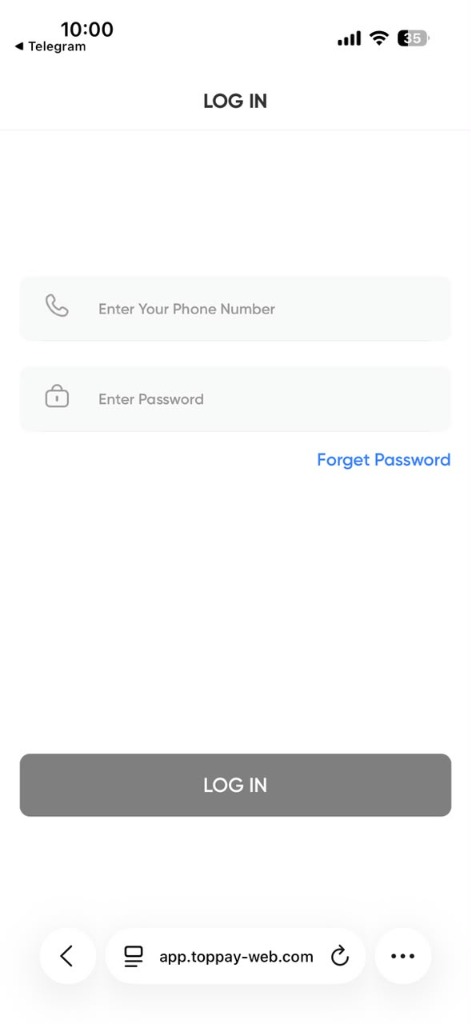
The Toppay login asks for two pieces of information: your registered mobile number and your password. Some accounts additionally use an MPIN for transaction confirmation.
Three rules that apply every single time:
- Check the full domain in the address bar reads toppay-app.online before typing anything.
- Never share your password, OTP or MPIN with anyone, including someone claiming to be support staff.
- If login fails repeatedly, stop and use password recovery rather than guessing.
Toppay and USDT
A large share of activity on this platform involves Toppay USDT — the Tether stablecoin. USDT exists on multiple blockchain networks (TRC20, ERC20, BEP20 and others), and those networks are not interchangeable. Sending USDT on the wrong network to an address created for a different network usually means the funds are unrecoverable.
Because of that risk, the USDT material on this site is separated into its own guides: Toppay USDT guide, USDT deposit steps, and the USDT to INR converter for estimating value in rupees before you act.
What Toppay is not
Being direct about limits is part of being a trustworthy source, so:
- This site is not a distributor of APK files. Any page offering a “Toppay APK download” is not this site.
- This site does not guarantee returns, profits or earnings. Any message promising fixed daily returns in the Toppay name should be treated as a red flag.
- Support will never ask for your password, OTP or MPIN. There is no legitimate reason for anyone to request them.
- These public guide pages do not collect account credentials or personal data.
Why people search “Toppay real or fake”
The word “Toppay” is used by several completely unrelated companies and apps around the world — there are different Toppay-branded apps on app stores, and separate Toppay domains registered in other countries. So when someone searches Toppay real or fake, they are often comparing several different products without realising it.
The practical answer is to verify the specific domain you are on rather than the brand name. We wrote a full verification checklist for exactly this on the Toppay real or fake page.
Getting help
If something is not working, the Toppay support guide explains what to check before contacting anyone, and Toppay customer care lists the official contact channels. For any specific task, the full guide index has a dedicated page.
Toppay Real or Fake?
Toppay real or fake is one of the most-searched questions about this brand, and it deserves a straight answer instead of marketing language. The honest answer is this: “Toppay” is not one single product. Several unrelated companies and apps around the world use the name. So the useful question is not “is Toppay real?” — it is “is the specific Toppay site or app in front of me the one I intended to use?”
This page gives you a checklist to answer that yourself, without trusting anyone’s word, including ours.
Why there is confusion around the Toppay name
Search “Toppay” and you will find several distinct things: multiple Toppay-branded apps on app stores from different developers, a Toppay in Nigeria, a Toppay in Indonesia, a Toppay API service in Asia, and a company called Toppay Services Ltd. None of these are connected to each other.
That is normal for a generic-sounding payment name, but it means brand-level reviews are close to useless. A review of “Toppay” on some review site may be reviewing a completely different product. Domain-level verification is the only thing that actually tells you anything.
Verification checklist
Work through these in order. If any one of them fails, stop.
1. Check the exact domain, character by character
This platform is served from toppay-app.online. Look at the full address bar, not the page design. Fake pages copy layouts perfectly; they cannot copy the domain. Watch for extra words, hyphens in different places, alternative endings (.com, .net, .xyz, .app), or lookalike characters.
2. Check for HTTPS and a valid certificate
The address should begin with https:// and your browser should not show any certificate warning. Tap the padlock icon and confirm the certificate is issued to the domain you expect. Any warning at all means leave the page.
3. Never install an APK from a link
This site does not distribute a Toppay APK. If you receive an APK through Telegram, WhatsApp, SMS or a download site claiming to be the Toppay app, treat it as hostile. Sideloaded APKs commonly request SMS, accessibility and overlay permissions, which are exactly the permissions needed to read your OTPs and capture what you type. The legitimate mobile experience here is a browser page — see the Toppay app download guide.
4. Test the “guaranteed returns” signal
No legitimate payment platform guarantees a fixed daily or monthly profit. If someone in a Toppay-branded group promises 1% daily, doubled deposits, or a “VIP plan” with fixed returns, that is a financial-fraud pattern regardless of what brand name is attached to it.
5. Test the credential request signal
Real support never needs your password, OTP or MPIN. Not to “verify” you, not to “speed up” a withdrawal, not for any reason. A request for those is a definitive sign you are talking to an attacker, even if the account name and profile picture look official.
6. Test with a small amount first
Before any large transfer — on any platform, not just this one — do a small test transaction and complete the full round trip, including a withdrawal back out. If a platform accepts deposits smoothly but creates obstacles, fees or delays when you try to withdraw, that is the single most reliable warning sign in this entire category.
7. Check the URL again on every visit
Bookmark the login page instead of searching for it each time. Search-ad phishing is common: attackers buy ads for brand names and place a look-alike domain above the real result. A saved bookmark bypasses that risk entirely.
Common fake-Toppay patterns to recognise
- Look-alike domains — same design, slightly different address, harvesting logins.
- APK bundles — a “faster app” file shared in a group chat that requests SMS permissions.
- Fake support accounts — someone messaging you first, claiming to be support, asking for your OTP.
- Investment plans — fixed-return schemes attached to a payment brand name.
- Recovery scams — after a loss, someone offers to “recover” funds for an upfront fee.
What this site does and does not claim
To be clear about our own position: this website publishes the Toppay login and public help guides for the platform served at toppay-app.online. We do not promise returns. We do not distribute APK files. We do not ask for credentials on any public page. What we can do is give you the verification tools above so you can judge for yourself.
Read the About Toppay page for what the platform is, and the support guide if something has already gone wrong.
If you think you have been targeted
Change your password immediately from the official login page, review recent activity in your account, and stop communication with the contact who approached you. Never pay an upfront “recovery fee”. In India, financial fraud can be reported on the national cybercrime portal at cybercrime.gov.in or by calling the 1930 cyber-fraud helpline.
How to Use Toppay
This is a beginner orientation to Toppay. It covers the four things that matter on day one: reaching the correct Toppay login, signing in, understanding what you are looking at, and knowing where to go when something does not work.
Step 1: Reach the correct Toppay login
Open your browser and go to toppay-app.online. Type it manually the first time, then bookmark it. From that point on, always use the bookmark.
Why the bookmark matters more than it sounds: attackers buy search advertisements for payment brand names and place look-alike domains above the genuine result. Someone searching the brand every day is repeatedly exposed to that risk; someone using a bookmark never is.
Before typing anything, confirm two things: the address bar reads the complete domain, and there is a padlock indicating a valid HTTPS certificate.
Step 2: Sign in to your account
The Toppay login form asks for your registered mobile number and your password. Enter the number without country code unless the field asks for it, then your password, then tap LOG IN.
If it fails:
- Check for a leading or trailing space in the password field.
- Check whether autocorrect capitalised the first character.
- Confirm you are using the number the account was registered with.
- After two failed attempts, stop and use password recovery rather than continuing to guess.
Step 3: Understand your dashboard
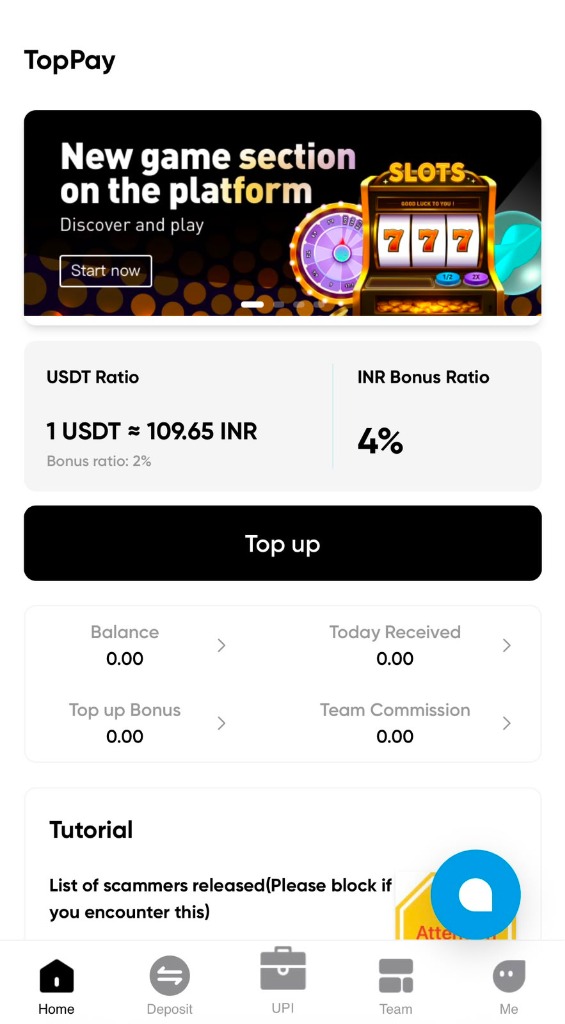
After signing in you reach your account dashboard. What appears there depends on your specific account, so this guide describes categories rather than promising particular buttons.
- Balance — your current account balance as recorded by the platform.
- Transaction history — a record of past activity with status for each entry.
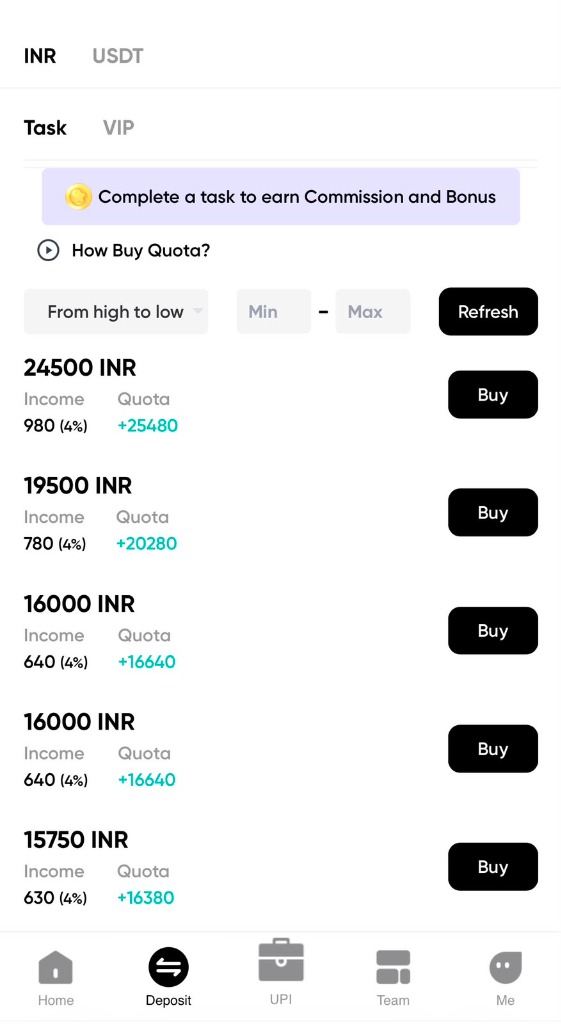
- Deposit / withdrawal options — whichever payment methods are enabled for your account.
- Profile and security — password change, MPIN setup, and contact details.
Treat the dashboard as the single source of truth. Rates, fees, limits and available methods can change, and a screenshot someone shared last month may no longer be accurate.
Step 4: Set up your security properly
Do this once, early, and it saves problems later.
- Set a password used nowhere else. Reused passwords are how one breach becomes many.
- If MPIN is available on your account, set it, and choose something that is not your birth year or a repeated digit.
- Confirm the registered mobile number is current, since recovery depends on it.
- Never save your password in a chat message or a photo in your gallery.
Step 5: Make your first transaction carefully
Whatever the amount you eventually intend to move, start smaller than that. Complete one deposit and one withdrawal at a low value so you have seen the entire round trip work before committing more.
For the actual steps, use the guide that matches your method: general deposits, USDT deposits, or withdrawals.
Everyday habits that keep the account safe
- Sign in only from your own device, never a shared or public computer.
- Log out when you finish on a device that others can access.
- Never share your password, OTP or MPIN — support will never ask.
- Ignore unsolicited messages offering “help”, faster withdrawals, or a special APK.
- Check your transaction history periodically rather than only when something looks wrong.
Where to go next
New users usually need one of these: what Toppay is, how to get the app icon on your phone, how USDT works here, or how to verify the site is genuine. The complete guide index lists everything.
Toppay Password Help
If you cannot sign in to Toppay, work through this page in order. Most login failures are simple and resolve in under a minute — but repeated blind attempts can trigger a temporary lock, so it is worth checking the easy causes first.
First: rule out the simple causes
Before assuming the password is wrong:
- Check for a trailing space. Copying a password often carries an invisible space with it.
- Check autocorrect. Mobile keyboards capitalise the first character of a field by default.
- Check the phone number. Are you using the number the account was registered with, without an unexpected country code?
- Check the site. Confirm the address bar reads toppay-app.online. Entering a correct password on the wrong site produces exactly this symptom — and hands your password to someone else.
- Try another browser. An extension or a corrupted cache occasionally breaks form submission.
Step 1: Use Forget Password on the login page
Open the official Toppay login page and use the Forget Password link shown on the form. Start recovery only from that link — never from a link in an email, SMS or chat message, which is the standard delivery route for credential phishing.
Step 2: Complete the verification
Recovery normally sends a verification code to your registered mobile number. Enter that code into the recovery page only.
This deserves emphasis: the OTP goes into the website, and nowhere else. Nobody — not support, not an administrator, not anyone in any group — ever has a legitimate reason to ask you to read out, forward, or share that code. A request for it is proof you are talking to an attacker.
Step 3: Set a strong new password
When choosing the new password:
- Use at least 12 characters where the field allows it.
- Mix upper and lower case, numbers and a symbol.
- Do not reuse a password from any other service. Reuse is how a breach elsewhere becomes a loss here.
- Avoid your name, birth year, or your phone number.
- Store it in a password manager or somewhere physically secure — never in a chat message or a photo in your gallery.
Step 4: Sign in and review the account
Return to the login page and sign in with the new password. Then check your recent transaction history for anything you did not authorise, and confirm your registered mobile number and any linked payment destinations are still correct.
If you suspect the account was accessed by someone else, review destinations carefully — changing a payout destination is a common follow-up step after a compromise.
If recovery does not work
- Code never arrives — check network coverage and your SMS spam filter, wait a minute before requesting again, and confirm the number on the account is the one you still use.
- Number no longer in use — SMS recovery cannot work. Contact support through an official channel and expect additional identity verification.
- Account temporarily locked — stop attempting. Wait for the lockout window to expire; further attempts usually extend it.
- Code rejected — confirm you are entering the most recent code; requesting a new one invalidates the previous one.
See Toppay customer care for official contact channels.
MPIN versus password
Some accounts use both. The password signs you in; the MPIN confirms transactions. They should be different values, and neither should ever be shared. If you have forgotten the MPIN, look for the MPIN reset option in your profile or security settings after signing in.
Protect yourself during recovery
Recovery is when people are most vulnerable, because they are stressed and want a fast fix. That is precisely when attackers approach.
- Support will never ask for your current password.
- Support will never ask for an OTP or MPIN.
- Support will never ask you to install a remote-access or screen-share app.
- Nobody legitimate will offer to “recover” your account for a fee.
- Start recovery only from the official login page you reached yourself.
If you were contacted after a failed login and shared anything, treat the account as compromised: change the password immediately from a device you trust and review recent activity. The verification checklist explains what to check next.
Last updated: 2026-08-22 · Published by TopPay · Read the disclaimer